Concrete Foundation Options for Stroudsburg Homeowners: New Builds vs. Additions
Not every project in Stroudsburg needs the same foundation — and in Monroe County, the wrong choice can mean failed inspections or a structure that shifts after the first hard winter. Pennsylvania's frost depth in the Pocono region reaches 42 to 48 inches, which means footings must go deep enough that freezing ground can't push them out of position. That single requirement shapes nearly every foundation decision you'll make here.
Add in Stroudsburg's varied terrain — rocky shale on higher lots, clay-heavy or wet soil near the Brodhead and McMichaels Creek corridors — and it becomes clear that what works two miles away may not work on your specific lot. This post helps you match the right foundation type to your actual project.
Why Does Foundation Type Matter More in the Poconos?
Monroe County's frost depth and terrain mean foundation decisions have real consequences — a shallow or undersized footing will heave, crack, or fail inspection before you ever pour.
When soil freezes, it expands. If your footings don't extend below the frost line, that expansion lifts and shifts the structure above it — a process called frost heave. At 42 to 48 inches deep, Monroe County's frost line is significantly deeper than many warmer-climate markets, which is why full perimeter foundations are the norm here rather than the exception.
Sloped lots are also extremely common in the Stroudsburg area. Slope affects whether a walkout basement, crawl space, or slab-on-grade is even physically feasible. Rocky substrate on elevated lots may require rock breaking during excavation, while low-lying areas near creek drainages may need French drains or regrading before any concrete work begins.
New Home Construction: What Foundation Do You Need?
For a new home in Stroudsburg, a full perimeter foundation — poured concrete basement or crawl space — is the standard choice because it meets structural load requirements, supports utilities, and complies with Pennsylvania UCC frost-depth rules.
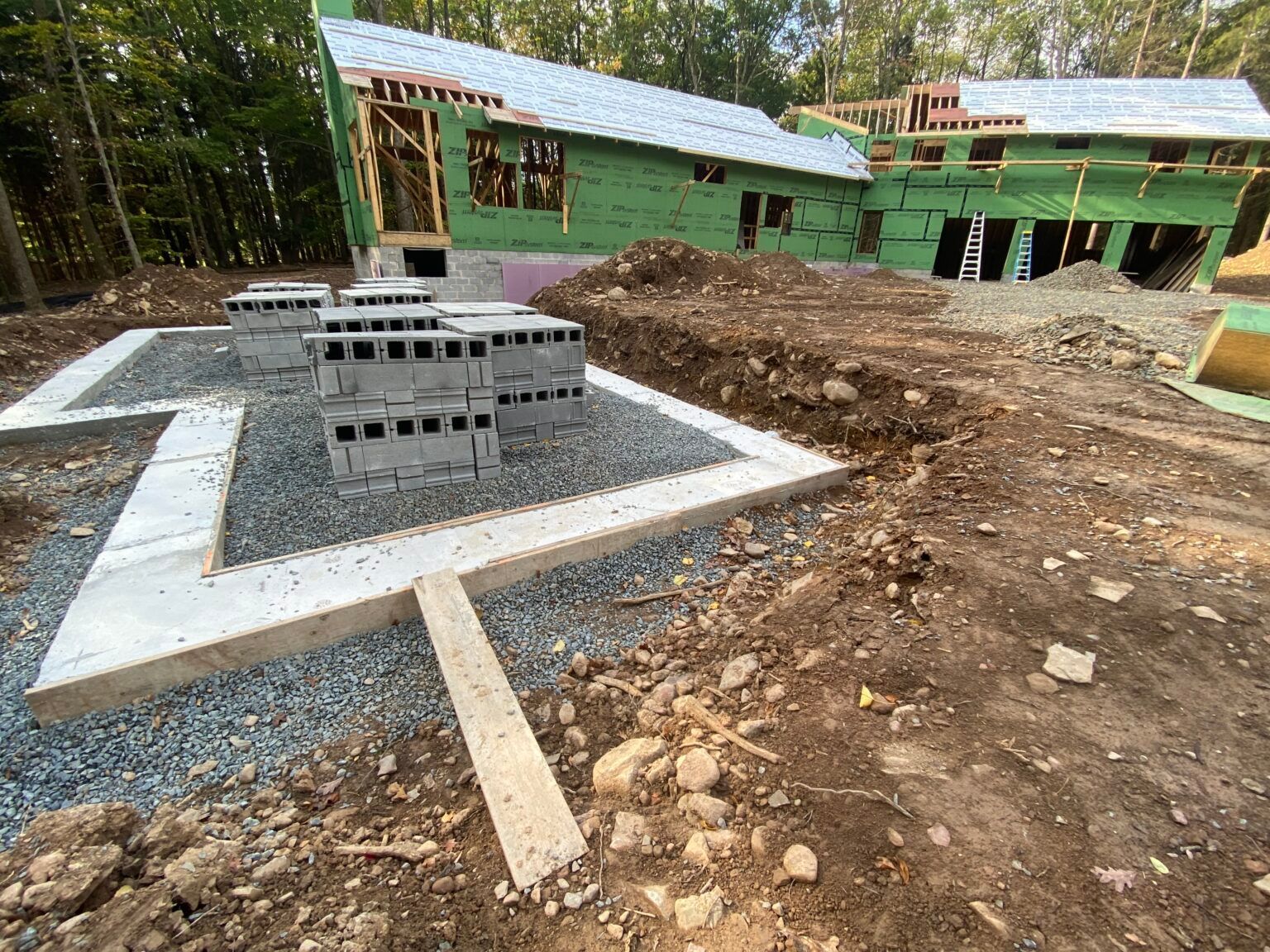
A full foundation involves excavating the entire footprint to below the frost line, forming and pouring footers, then pouring the foundation walls. It's the most involved scope of site work, but it also gives you usable space below grade for mechanicals, storage, or living area. On a sloped lot, this often becomes a walkout basement naturally — the hillside creates a below-grade wall on one side and an at-grade opening on the other.
Soil testing and drainage planning happen before excavation begins. Rocky substrate is common enough on Stroudsburg's higher elevations that site assessments can reveal blasting needs — a cost variable worth knowing early. Learn more about what's involved with concrete foundation services before committing to a scope.
Home Additions: Full Foundation Extension or Slab?
For a home addition in Stroudsburg, the right answer depends on the addition's size, the existing foundation type, and how the two structures will connect — mismatched foundation depths cause differential settlement, which cracks walls and floors over time.
A small addition on a flat, well-draining lot may qualify for a frost-protected slab-on-grade design, where insulation keeps the soil beneath from freezing. But if the existing home has a full basement, extending with a slab creates a depth mismatch at the joint — that transition point becomes a stress concentration as soil conditions change seasonally.
Larger additions or those that need to tie directly into an existing basement almost always call for a full foundation extension. The addition's footings should match the depth of the original structure's footings, or differential movement will show up in the finishes within a few years.
Do You Need a Full Foundation or a Slab for a Stroudsburg Garage?
For a detached garage in Monroe County, an unheated structure on a flat lot can often use a thickened-edge slab, but a heated garage or any larger structure typically requires a full perimeter foundation — and frost-depth rules still apply to the footings either way.
A thickened-edge slab works by making the perimeter of the slab deeper and wider, acting as an integrated footing. For an unheated, single-car garage on well-draining soil, this is often code-acceptable and more budget-friendly upfront. For a two-car or larger garage, or any structure you plan to heat, a full perimeter foundation provides better thermal stability and structural support.
The heated-versus-unheated distinction matters because a heated slab introduces temperature differentials at the slab edge that can accelerate frost action if the footing isn't deep enough. When you're comparing your options for a garage floor specifically, exploring concrete slabs and flatwork can clarify what slab designs are available for your project type.
When Slab-On-Grade Works — and When It Doesn't
A slab-on-grade makes the most sense for flat lots with good drainage, smaller accessory structures, and projects where below-grade space isn't needed — but it fails quickly on sloped lots or in poorly draining soils without significant prep work.
The key variables are drainage and slope. Standing water beneath a slab causes erosion, undermining, and eventual cracking. Clay-heavy soils — common near Stroudsburg's lower-elevation areas — retain moisture and shift more than sandy or gravelly soils. On those sites, grading and drainage correction must happen before any slab is poured, or the slab will reflect the soil movement beneath it.
Frost-protected shallow foundation (FPSF) design can make slabs work in cold climates by using rigid insulation around the slab perimeter to keep soil temperatures above freezing. This is a legitimate option, but it requires specific insulation placement and is more commonly seen in accessory structures than in new home construction here.
Stroudsburg Seasonality and Permit Requirements
Monroe County winters limit the pour season for exposed concrete work, and all foundation projects in Stroudsburg Borough and surrounding townships require building permits — footings are inspected for frost-depth compliance before the pour is approved.
Pennsylvania UCC governs residential foundation design statewide, but local inspectors confirm that footings reach the required depth on your specific lot before you can proceed. Scheduling that inspection correctly matters — pouring before approval means tearing out work. Plan your project timeline to account for permit processing and inspection windows, especially if you're targeting a spring start after frozen ground thaws.
Site work — grading, excavation, and drainage installation — always precedes the foundation pour. On sloped Stroudsburg lots, this phase takes longer and costs more than it would on a flat suburban lot. Rocky substrate may add blasting or mechanical breaking time. Getting an on-site assessment before any estimate is the only reliable way to understand what your specific lot will require.
Matching the right foundation to your project protects your investment from frost heave, soil movement, and code issues that would cost far more to fix after the fact. Every foundation type covered here has a context where it performs well — the goal is identifying which context fits your lot and your project.
Schedule an on-site assessment with Curb Appeal Masonry to get a clear picture of which foundation approach fits your Stroudsburg project, your soil conditions, and your budget.